Front Yard Flower Bed Ideas: 15 Rock-Inspired Designs for New Gardeners
Starting your gardening journey can be exciting, especially when you want to create a stunning first impression. A front yard flower bed can instantly boost curb appeal, and incorporating rocks adds a unique charm and structure to your garden. Whether you prefer classic borders or layered stone designs, front yard flower bed ideas with rocks offer versatile options that are both practical and visually appealing. This guide focuses on premium landscaping tips perfect for new gardeners aiming to cultivate a garden that's beautiful, durable, and easy to maintain.
Rock Garden Accents
Incorporate rocks into your front yard flower bed to add natural texture and contrast. Choose a variety of rock sizes and colors to create visual interest alongside your plants. Arrange stones in clusters or lines to frame flower groupings and highlight focal points in the garden.
This approach complements blooms by giving a grounded, earthy feel that balances soft petals with rugged stone. Experiment with positioning rocks near taller flowers to draw the eye upward or scatter smaller pebbles around low-growing plants for a tidy finish.
For more related ideas, explore Christmas Front Porch Ideas 15 Inspiring Ways to Decorate in 2026.
Mixed Stone Patterns
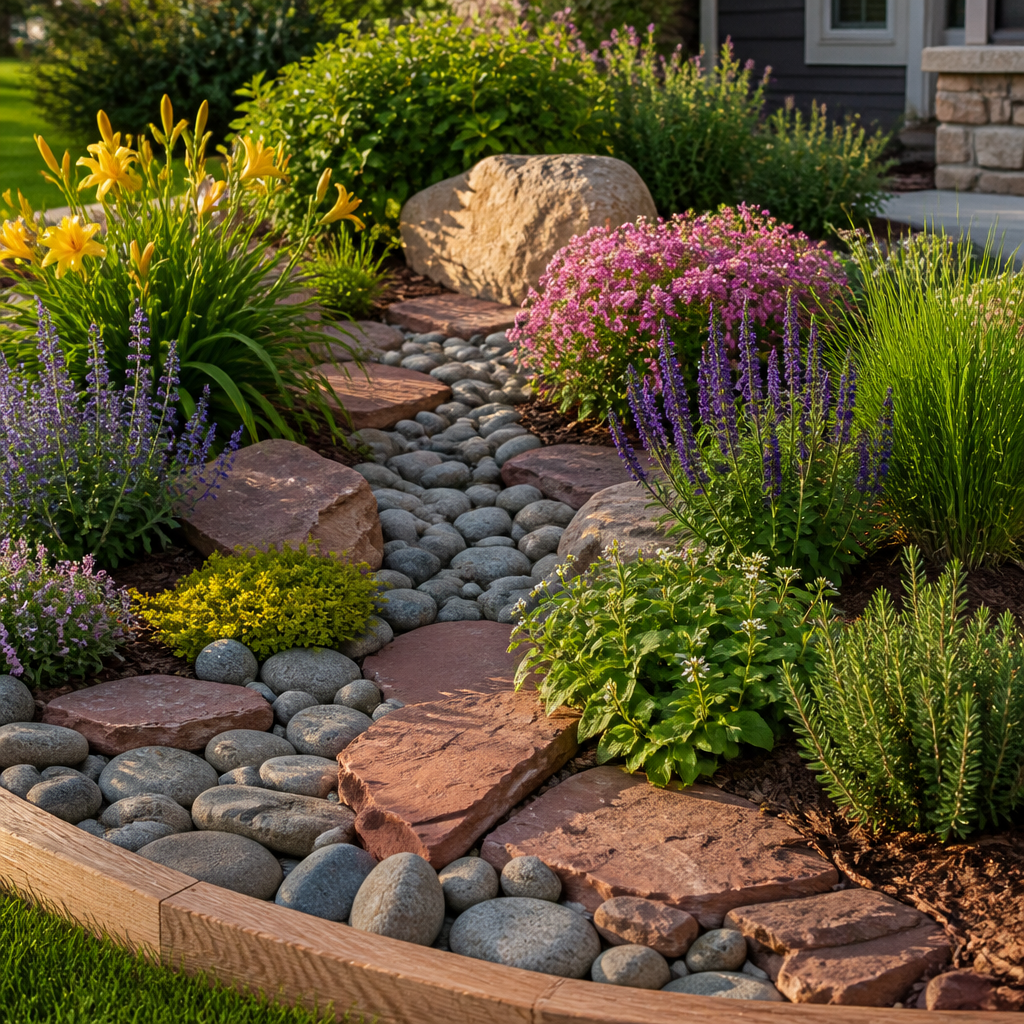
- Arrange different shapes and sizes of rocks to create a visually engaging pattern in your flower bed.
- Combine smooth river stones with jagged slate pieces for varied texture and color contrast.
- Use natural stone colors like grays, tans, and rust to complement the greenery and blooms.
- Ensure proper layering by placing larger rocks at the base to stabilize the arrangement and smaller ones on top for detail.
Incorporating mixed stone patterns in your front yard flower bed offers a rich, textured look that enhances natural beauty. Thoughtful rock placement can effectively highlight plants while creating a polished and premium garden design ready to impress any visitor.
Natural Rock Borders
Quick Tip:
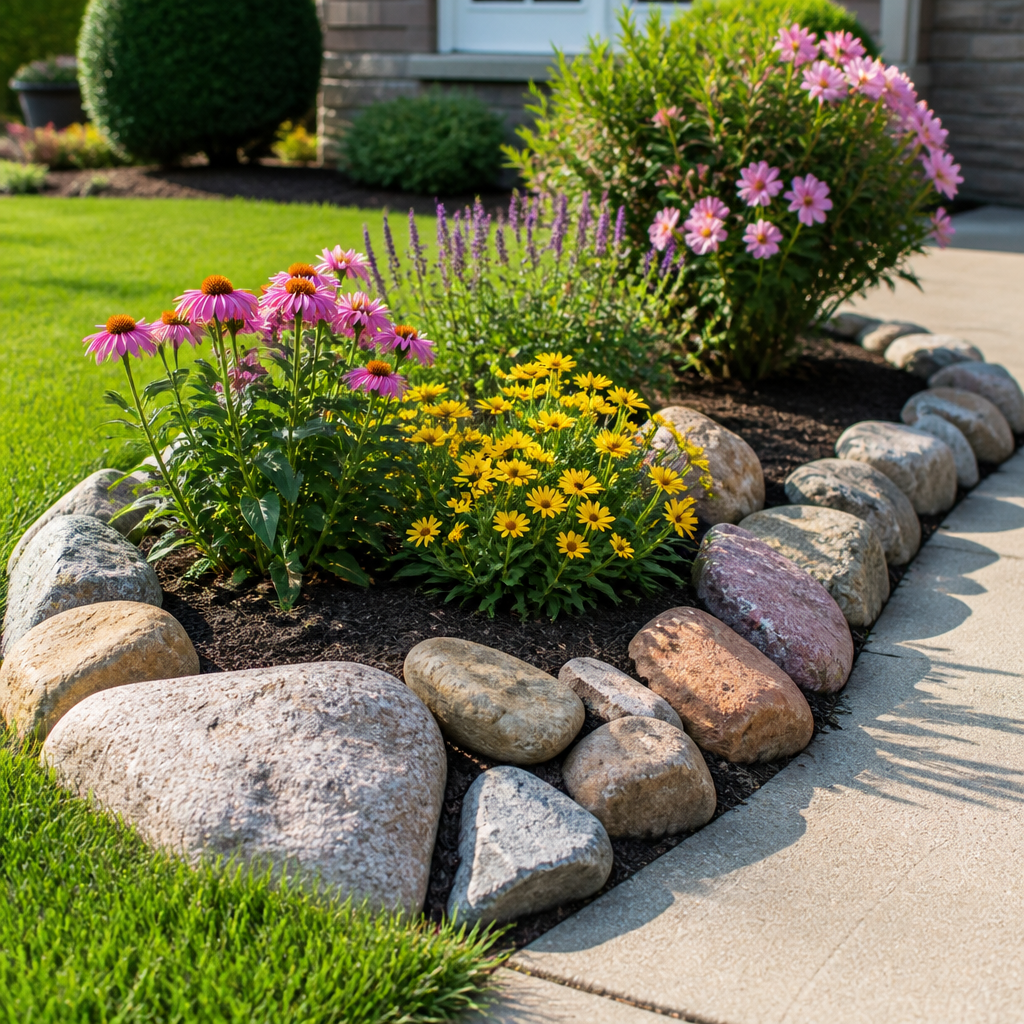
Use natural rock borders to create a subtle, elegant boundary around your flower beds that blends seamlessly with the garden environment. Arrange rocks of varying sizes for a dynamic, organic look that complements your plant selections.
Incorporating natural rock borders enhances your front yard flower bed's structure while maintaining a warm, earthy tone. This technique adds visual interest without overwhelming your flowers, promoting a balanced and inviting curb appeal. Experiment with rock placement to find a style that meshes well with your garden's overall theme.
Transformative Rock Edges
Before:
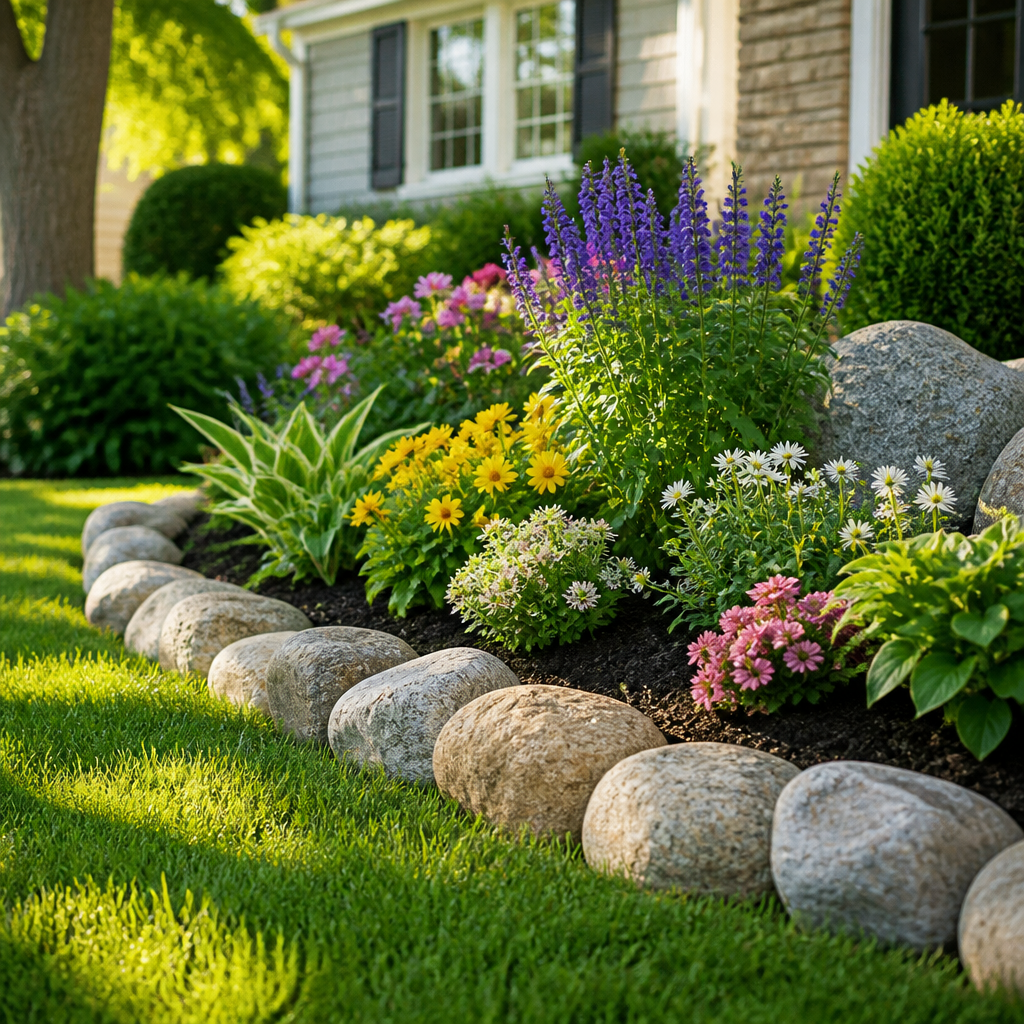
Before installing natural rock borders, the front flower bed had plain soil edges prone to erosion and lacked definition. The space felt open but unfinished, with plants blending into the lawn without clear separation.
After:
After adding carefully arranged natural rocks along the flower bed edges, the area gained structure and charm. The rocks form a durable border that prevents soil runoff and creates a visually appealing contrast with greenery, enhancing overall curb appeal.
Defining flower bed edges with natural rocks can elevate the yard’s appearance and functionality. This approach reduces maintenance while giving your garden a polished look. Trying this design can inspire confidence in your gardening skills and encourage further outdoor creativity.
For planting and layout guidance, explore RHS garden design guidance.
Step-by-Step Rock Bed

- Select rocks of varying sizes and colors for a natural, layered look.
- Clear and level the flower bed area, removing weeds and debris.
- Arrange the largest rocks first to create the frame of the bed edges and focal points within the bed, ensuring stability and visual interest at multiple points in the layout for balance and flow throughout the front yard flower bed ideas with rocks environment reflecting a natural feel that integrates with your home's exterior and landscape design aesthetic in the United States high-end setting in spring daylight on a bright and clear day capturing vivid colors and shadows with a moderate aperture for depth of field and medium distance framing capturing the entire bed and adjacent lawn within a 1:1 aspect ratio photo composition using natural sunlight to highlight textures and colors of rocks and plants in sharp, detailed photographic style with balanced and warm tones typical of early morning light for premium home decor inspiration inclusion good use of light and shadow for contrast and dimension emphasizing the rough textures of rocks against the soft leaves and flowers of plants emerging among them for a welcoming front entry garden vibe, wooden pathway beside the bed enhancing sense of craftsmanship and care.
Following these steps will help you create a balanced flower bed with rocks that both protects and highlights your plants. Proper placement of stones boosts visual appeal while supporting healthy plant growth. With patience and thoughtful arrangement, your upscale front yard flower bed ideas with rocks will thrive beautifully.
Stone Versus Brick Borders
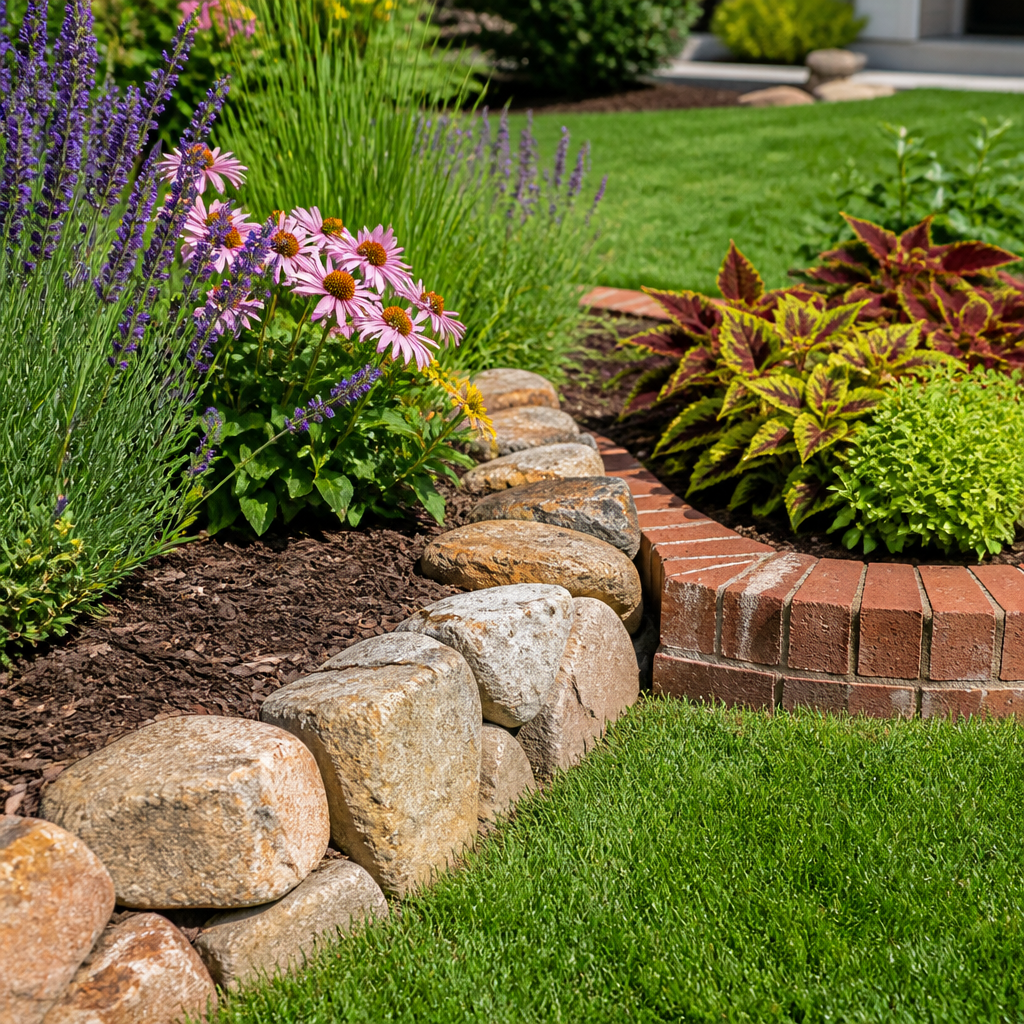
| Point | Natural Stone Border | Brick Edging |
|---|---|---|
| Visual appeal | Natural stones offer an organic, varied look with irregular shapes and textures. | Brick edging provides a uniform, classic appearance with consistent shape and color. |
| Durability | Natural stones withstand weather well but may shift over time without solid installation. | Bricks are durable but can crack or crumble under harsh conditions if not properly set. |
| Installation | Stone borders require careful placement for stability and can be time-consuming. | Brick edges are easier to lay in straight lines and typically need less effort to install. |
Choosing between natural stone and brick borders depends on your design preference and maintenance willingness. Both can elevate a front yard flower bed using rocks beautifully. Consider your desired look and installation effort to create an elegant, inviting entrance.
Do and Don't Landscaping
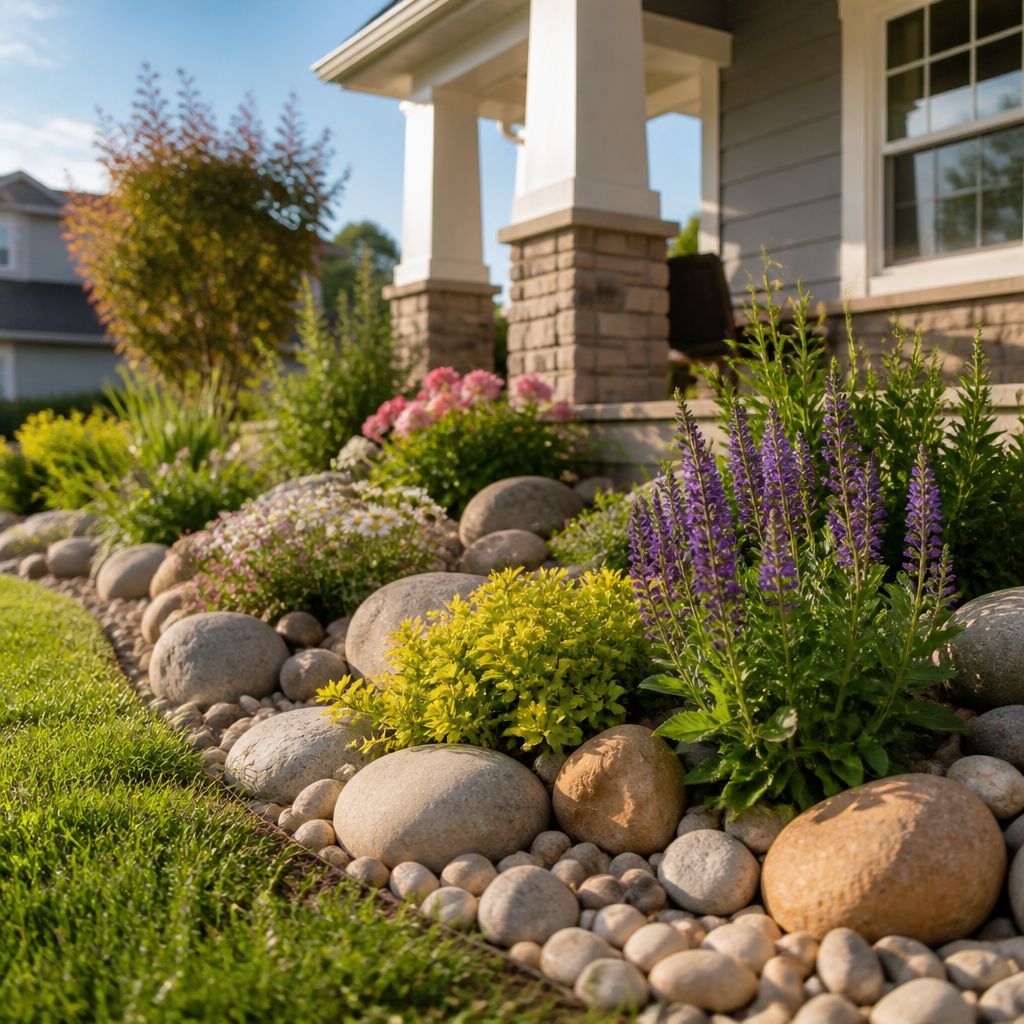
Do:
- Use various rock sizes to create visual interest and natural flow within the flower bed.
- Incorporate native plants that thrive alongside rocks to ensure easier maintenance and a cohesive look.
- Arrange rocks so they feel purposefully placed but still retain an organic appearance.
Don't:
- Avoid overcrowding the flower bed with too many rocks, which can overshadow the plants.
- Don't use sharp or jagged rocks that may be hazardous or damage plant roots.
- Resist placing rocks randomly without considering plant layout or sunlight patterns.
By following these do’s and don'ts, you create a front yard flower bed that balances rock features with thriving plants. Thoughtful rock placement alongside carefully chosen flora helps maintain both beauty and function in your garden space.
Garden Care Checklist
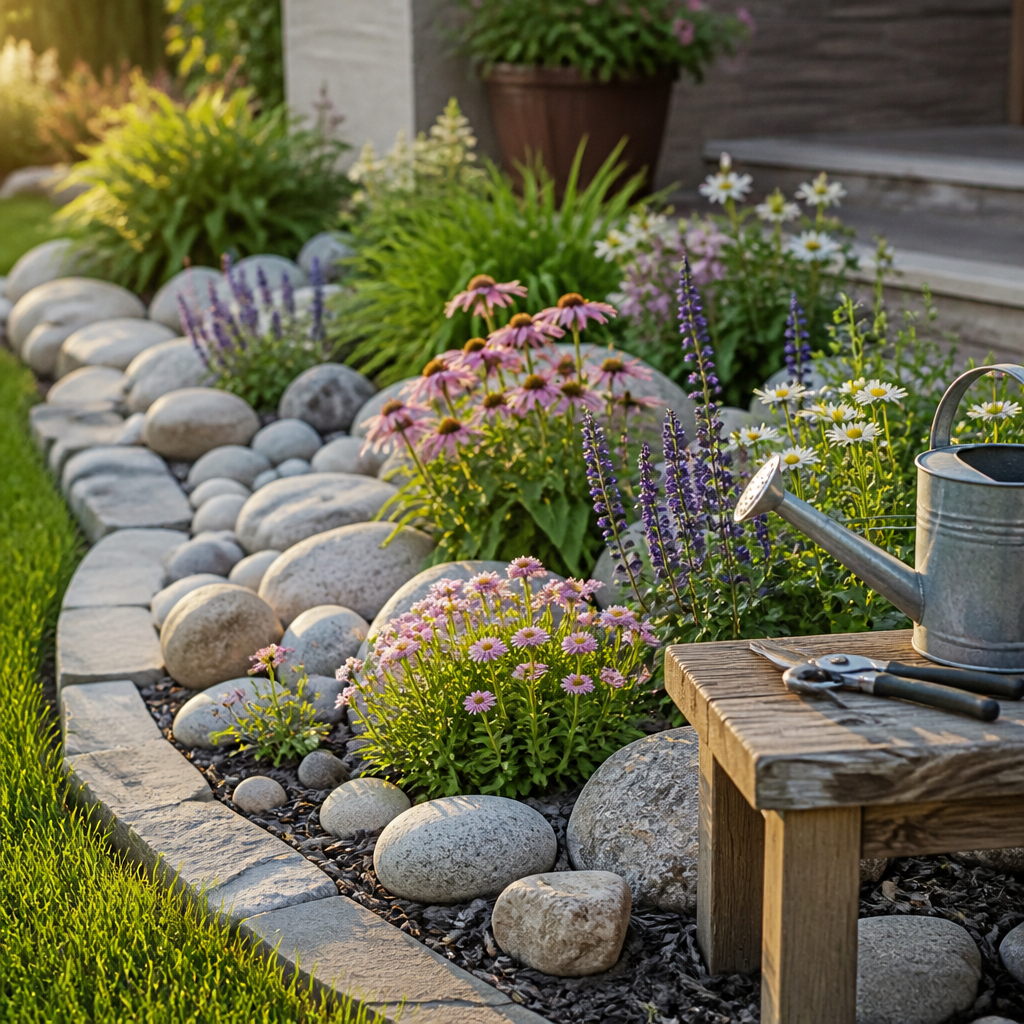
Watering: Provide consistent moisture to the soil, especially during dry spells, to keep both flowers and rocks settled and vibrant.
Weeding: Regularly remove weeds from the flower bed to maintain a clean appearance and prevent competition for nutrients.
Cleaning: Rinse or brush rocks occasionally to reduce dirt buildup and enhance their natural colors.
Maintaining a front yard flower bed with rocks requires a thoughtful care routine. Prioritize watering and weeding to support plant health, and keep stones looking fresh with periodic cleaning. These simple habits ensure your garden retains its beauty and inviting atmosphere throughout the seasons.
Elevated Rock Layers
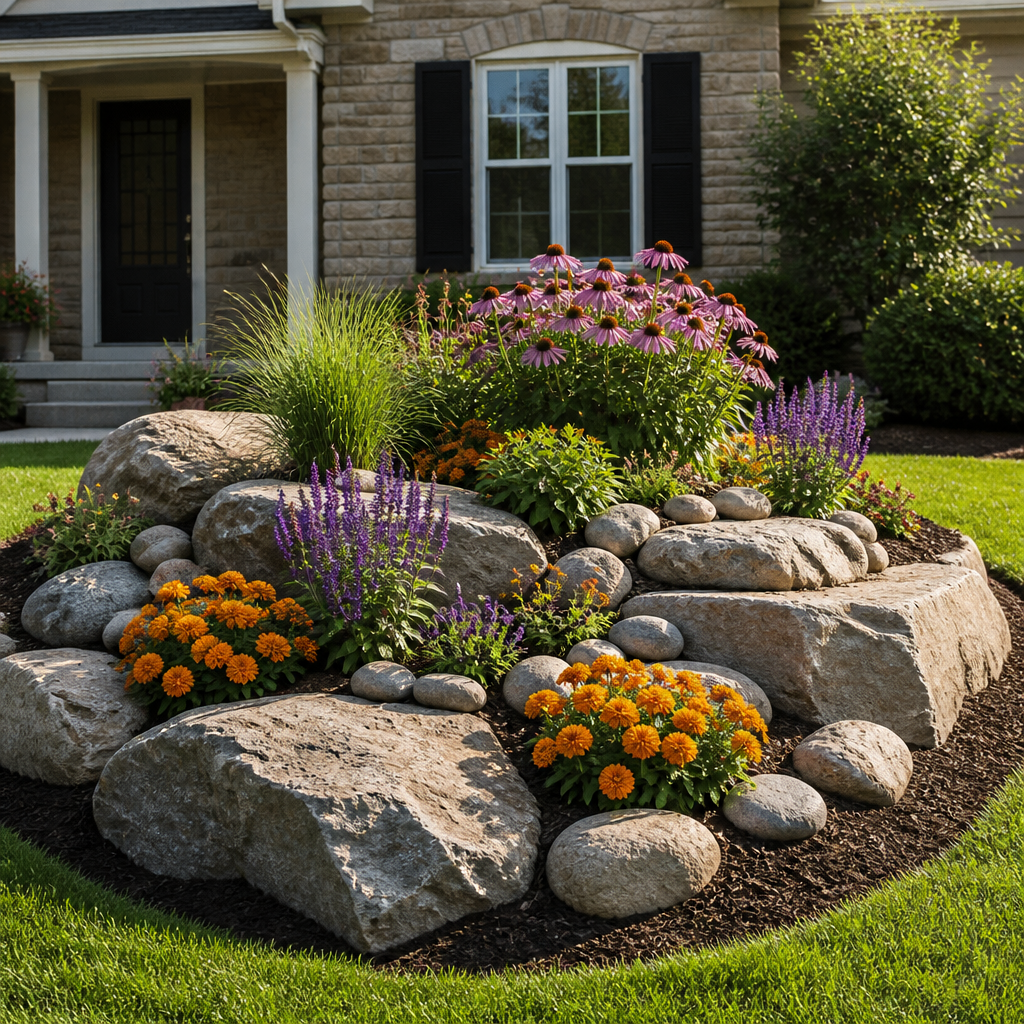
Create depth by layering rocks of varied sizes in your flower bed. Start with larger base stones and gradually add smaller rocks on top. This stratification mimics natural rock formations, adding visual interest and a sophisticated texture to your garden space.
Position colorful flowers between rock layers to soften harsh edges and bring vibrancy. Incorporating mulch around these arrangements helps retain moisture while offering a clean finish. This technique draws the eye upward and enhances your front yard's picturesque appeal, providing a dynamic yet harmonious garden feature.
Elegant Rock Highlights

- Choose smooth river rocks in varying sizes to add texture and elegance to your flower beds.
- Arrange rocks in small clusters to create focal points without overwhelming the plants.
- Use light-colored stones to brighten shaded garden areas or darker rocks to add contrast under bright sunlight.
- Integrate moss or low-growing ground cover between rocks for a natural, cohesive look.
Incorporating elegant rock highlights can enhance the visual interest of your flowers while adding structure to your front yard bed. Using varied sizes and subtle contrast helps create depth. Experiment with natural elements for a balanced, sophisticated appearance that complements your premium garden design.
Smart Rock Placement
Quick Tip:
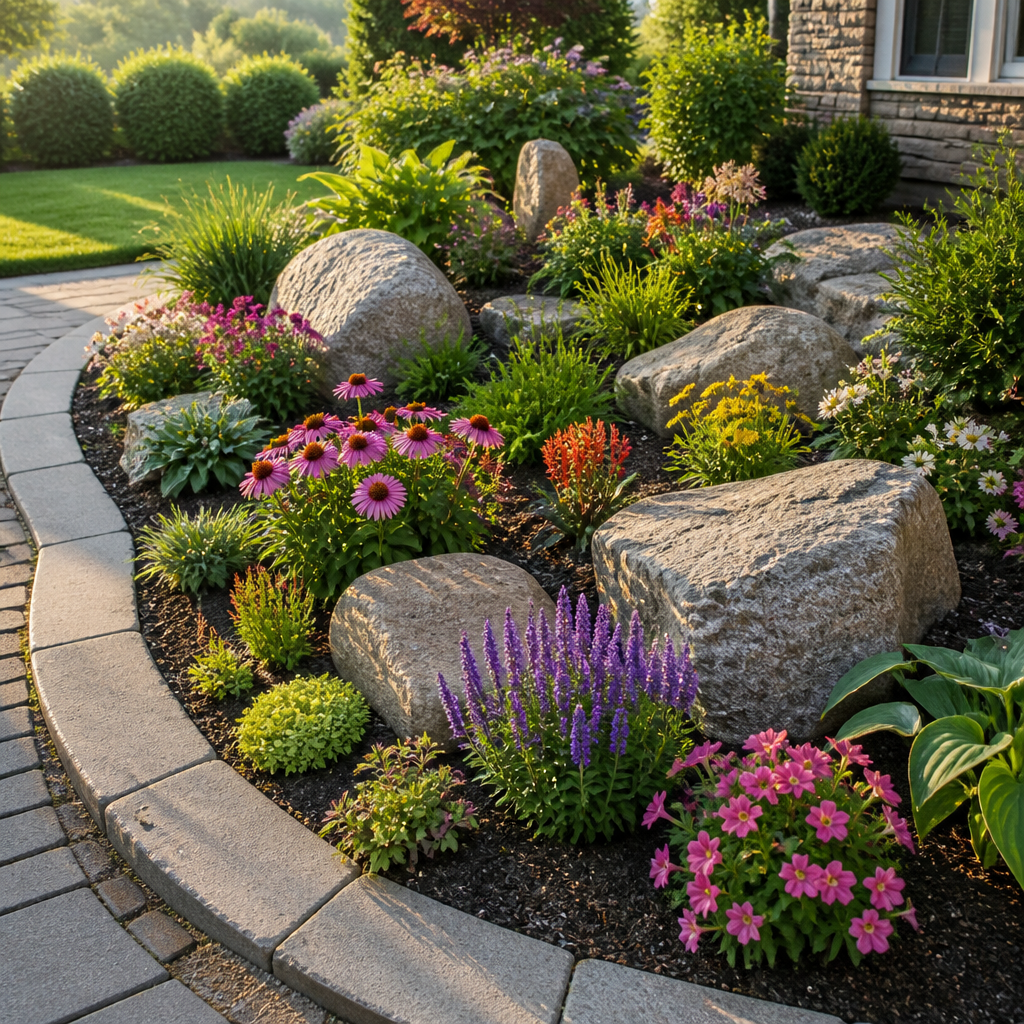
Place larger rocks at focal points within your flower bed to create natural interest and balance, avoiding clutter by spacing stones thoughtfully to highlight flowers.
Thoughtful rock placement can elevate your garden's overall appeal and functionality without overwhelming your plants. Use rocks to guide the eye and frame your blooms, enhancing the visual flow. When combined with your choice of flowers, this technique achieves a polished, cohesive look.
Visual Impact Shift
Before:
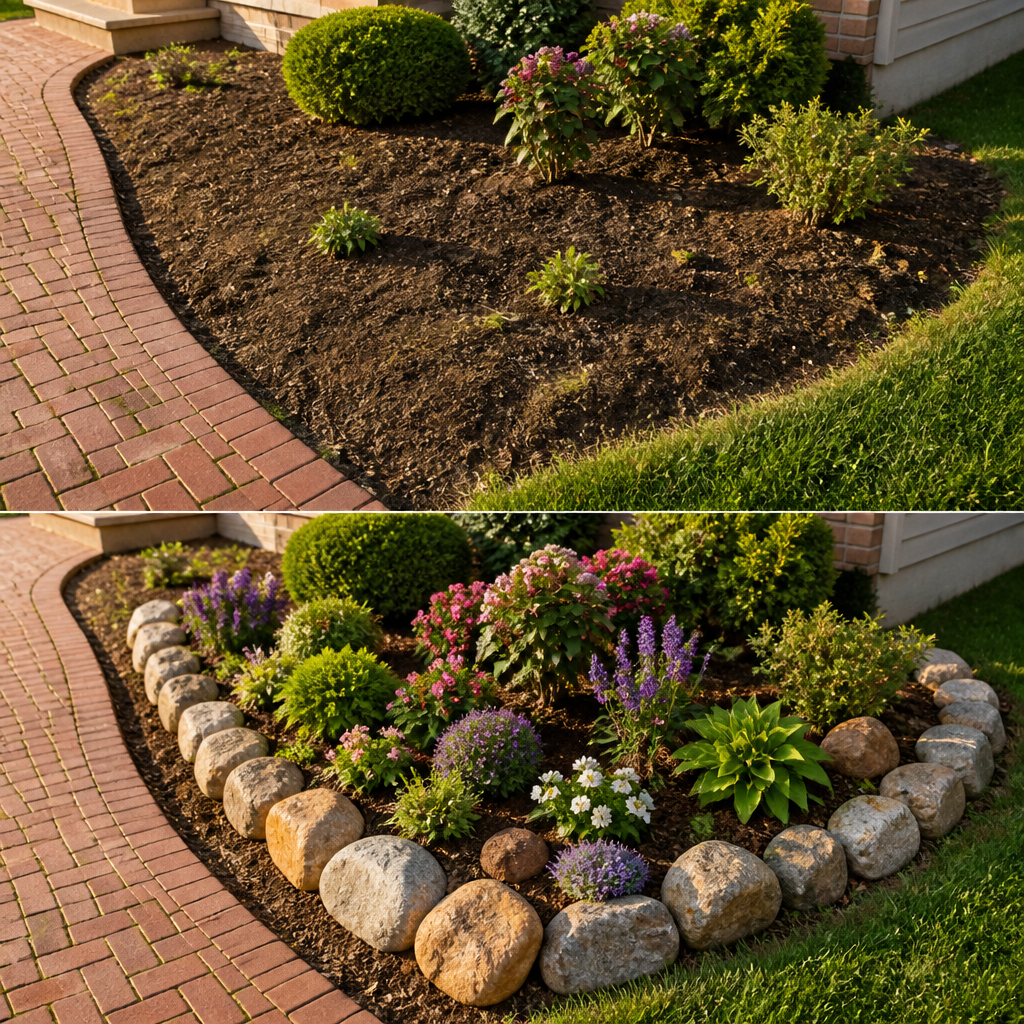
Before adding rocks, a front yard flower bed often appears plain and lacks definition, blending too much with the surrounding lawn. The soil may erode easily, and flowers can seem scattered without a clear structure.
After:
After incorporating rocks, the flower bed gains distinct outlines and texture, showcasing the plants more prominently. The natural stone elements create contrast and visual interest, making the area look more intentional and polished.
Creating a defined rock border or layering stones within a flower bed can dramatically improve curb appeal. This technique enhances plant visibility and prevents soil erosion, offering both functional and aesthetic benefits. Experimenting with various rock shapes and placements brings unique personality to your garden.
Layered Rock Installation
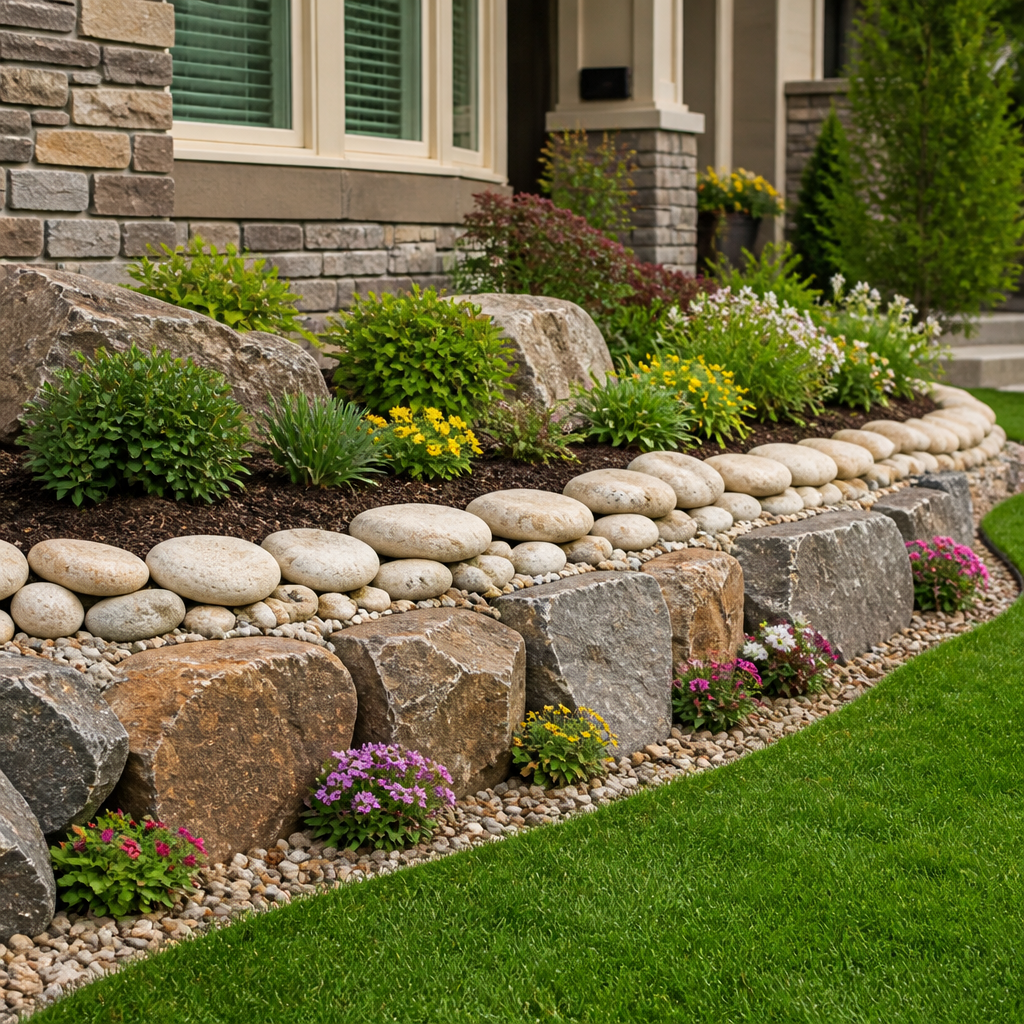
- Start by outlining your flower bed with a gentle curve to create a natural flow.
- Place larger rocks at the base of the bed to form a sturdy foundation.
- Add medium-sized stones on top of the base layer, spacing them evenly for visual interest and soil retention consistency, then fill in gaps with smaller pebbles and gravel to enhance texture and drainage integration.
Following these clear steps helps build a stable, attractive layered rock flower bed. This method controls soil erosion while producing a sculpted look that stands out. Layered installations add dimension and timeless appeal to your front yard with rocks, boosting its overall presentation with thoughtful design.
Stone Border Comparison
| Point | Natural Stone | Brick Edging |
|---|---|---|
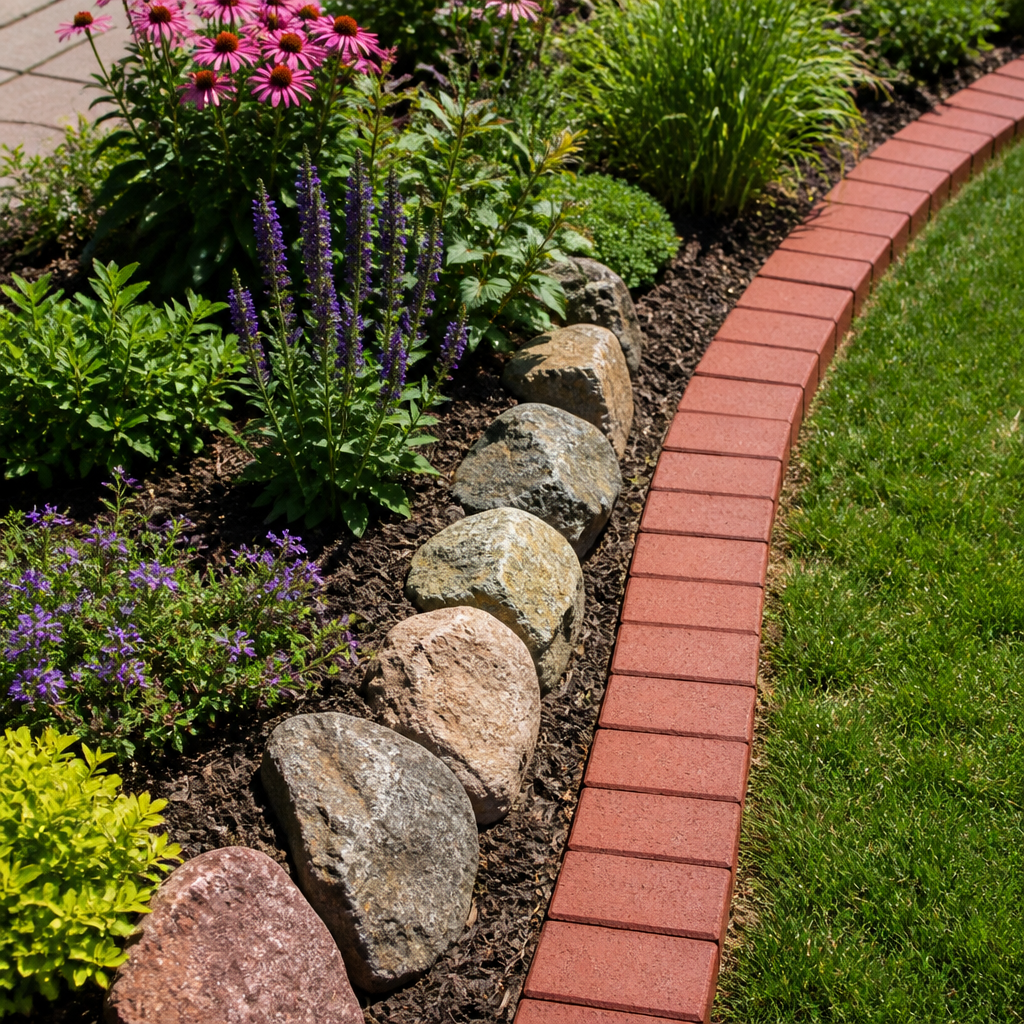
| Durability | Natural stone withstands weathering and lasts decades without significant wear. | Brick edging can chip or crack over time but offers a neat uniform look. |
| Appearance | Natural stone offers an organic, varied aesthetic blending well with flower beds. | Brick edging provides a classic, orderly appearance with consistent color and shape. |
| Installation | Natural stone requires careful placement and sometimes mortar for stability. | Brick edging is often easier to install with uniform shapes and sizes. |
Choosing between natural stone and brick edging depends on the desired look and maintenance willingness. Natural stone creates a timeless, rustic feel, while brick offers precision and ease. Both enhance flower beds beautifully with thoughtful selection based on your garden vision and effort availability.
Do and Don't Landscaping

Do:
- Do choose rocks that complement your plant selection and overall yard style for a cohesive appearance.
- Do arrange rocks in natural groupings rather than uniform lines to create a relaxed, organic look.
- Do include a variety of rock sizes to add depth and visual interest to the flower bed.
Don't:
- Don't overcrowd the flower bed with too many rocks, which can compete with the plants for attention.
- Don't place rocks directly on the soil surface without proper drainage, as this can harm plant roots.
- Don't use rocks with sharp edges near footpaths to avoid hazards.
Balancing plant health with decorative rocks requires thoughtful placement and selection. Following these do and don't guidelines ensures your flower bed remains vibrant, safe, and visually pleasing. Remember, rocks should support and highlight your plants, not overpower them, for a successful front yard landscape.
Incorporating front yard flower bed ideas with rocks is a fantastic way for new gardeners to introduce texture, elegance, and definition to their outdoor spaces. Begin with a simple rock border or try layering stones to find what suits your style best. Don’t forget to save this guide on Pinterest to refer back when you start your project, and share your progress with friends to inspire their gardening adventures.